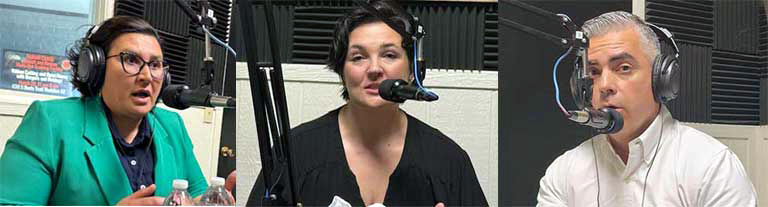


TUCSON — Two of the Democrats seeking to unseat incumbent Arizona Republican Congressman Juan Ciscomani issued statements critical of the federal government shut down, as did Ciscomani himself.
In a prepared statement released Oct. 1, Ciscomani said he has voted for six continuing resolutions under presidents Biden and Trump, and he laid the blame on the shutdown at the feet of Arizona’s two Democratic Senators, Mark Kelly and Ruben Gallego.
“Regardless of how my Democrat colleagues try to justify it, a vote against a CR is a vote to shut down the government. Period. I choose to govern, and Democrats choose politics. I voted based on what I stand for, not based on who sits in the White House. To both of our Arizona Senators, do better and put people before politics,” Ciscomani said.
But Democratic challenger JoAnna Mendoza said it was Ciscomani and Republicans who forced the shut down.
“Once again Juan Ciscomani shows us what he is — spineless,” Mendoza wrote in a prepared statement. “Republicans decided to shut down our federal government instead of negotiating a budget that protects health care and lowers costs for working Arizonans. Juan Ciscomani and House Republicans didn’t even show up.”
While not calling out Ciscomani specifically, Democratic challenger Samantha Severson did target Republicans for the shut down, stating on social media that 30,000 people in Arizona’s sixth Congressional District — which includes all of Greenlee County, most of Graham and Cochise counties, and parts of Pima and Pinal counties — will pay more for health coverage if the Republican plan moves forward.
“Make no mistake; Republicans in Congress are trying to harm millions of Americans. They repeat lies and make inflammatory statements, but they are refusing to accept the continuing resolution that would extend the tax credits for people on the ACA,” Severson wrote.
The shut down freezes non-essential government operations. Federal workers in essential position, such as those working at federal corrections facilities, U.S. Customs and Border Patrol, and the military, will continue to work without pay.
This is the third federal government shut down involving furloughs during a President Donald Trump administration. The first lasted three days in 2018 and the second for 35 days — the longest shut down in U.S. history — in late 2018 and early 2019.