



Topline: CSI research finds Arizona’s licensed child care providers have fallen by nearly half since 2002, even as the state’s population has surged. Closing the resulting gap could draw as many as 87,800 parents into the workforce and grow the state’s economy by up to 5%.
What CSI found
➤ A minimum- or low-wage worker must work up to 90 hours a month —over a third of typical working hours— just to afford child care, effectively locking one parent out of the workforce
➤ Arizona ranks 26th nationally in absolute toddler care costs, but 18th once measured as a share of median family income; for infant care, the state ranks 20th in cost but 6th by affordability
➤ Child care workers in Arizona earn just 57 cents on the dollar relative to the average worker, a $13.67/hr gap, and workers per capita have fallen from 1.5 per 1,000 residents to 0.8 in 2024
➤ Labor force participation among mothers with children under six is 6.3 points lower (68.4%) than mothers of school-age children (74.7%), a gap CSI links to child care costs and availability
➤ Child care licensing fees can reach $2,575 per year for centers, and home-based providers are capped at 4–10 children per home, regulatory costs providers cite as limiting their ability to expand or lower prices
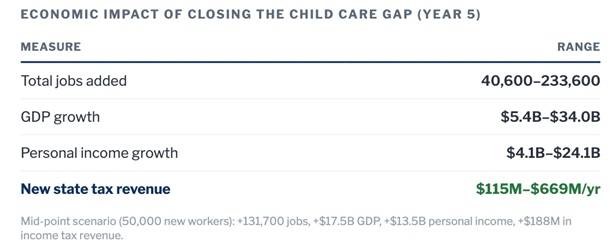
Bottom line: Fewer providers, higher costs, and a shortage of up to 87,000 slots are keeping Arizona parents out of work. CSI finds closing that gap could grow the state’s economy by up to 5%, but more subsidies would cost taxpayers $200 million to $1.1 billion a year. CSI argues the better return is easing the regulations that keep providers scarce and costly, especially for rural Arizona.