


Panicked calls flooded the 911 dispatch center in Amarillo, Texas around 9 a.m. on March 21, 2023. Witnesses described a man in overalls and a green T-shirt pointing a rifle at motorists southwest of downtown.
Within minutes, dispatchers fielded more than a dozen calls from the scene, a commercial strip with fast food joints, dive bars and loan shops. Two patrol cars raced to the area. In front of a budget motel, police found Kevin Langemeier. He was white, balding and middle-aged, with a thick beard and a hulking physique. Despite the 49-degree weather, he was barefoot.
Police said Langemeier was aiming a weapon at a van pulling into the parking lot, and when ordered to drop it, he raised it at one of the officers instead. Police opened fire, killing him.
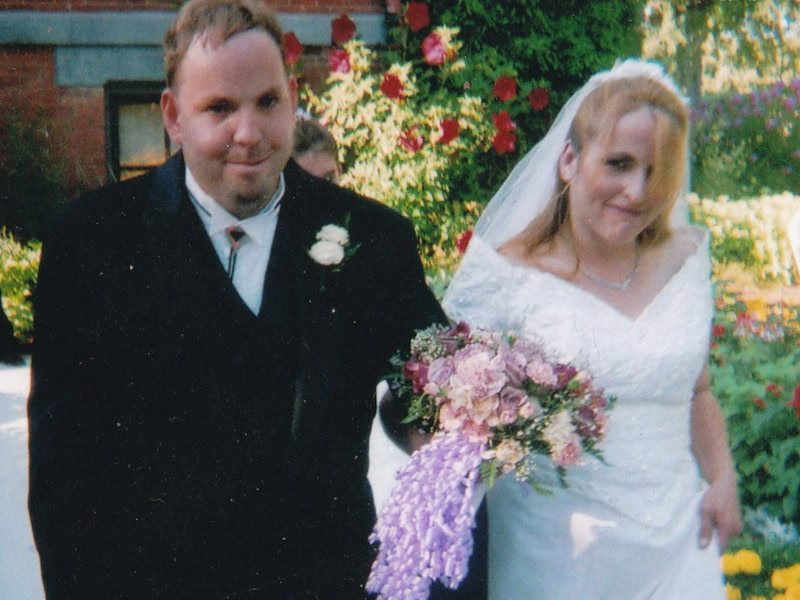
The man’s family released a lengthy statement in a local news outlet three days later. Langemeier had severe mental illness, they explained, and had been abruptly cut off from clozapine—the medication that kept his delusions in check—after his refill was denied because his lab results failed to reach the pharmacy. Within days, Langemeier spiraled into psychosis.
On the morning of his death, he left home on foot, clutching his brother’s BB gun.
If he hadn’t been denied his medication, his family believed, the man who loved Hot Wheels and making people laugh would still be alive.
“We don’t blame the police,” the family’s statement concluded. “We believe this story is primarily about the failing of the mental health system.”

Clozapine is widely considered the most effective treatment for patients with schizophrenia who do not respond to other drugs. But across the U.S., people repeatedly lost access to it because of a federal monitoring system that could block prescriptions over missed or delayed blood tests. Such interruptions can trigger rapid relapse into psychosis, sometimes with fatal consequences.
The system was meant to guard against a rare but dangerous drop in white blood cells called neutropenia. Federal regulators, however, have acknowledged they don’t know whether the clozapine Risk Evaluation and Mitigation Strategy program, known as REMS, worked as intended. Families, doctors and advocates have argued that the harms caused by the system outweighed its protections.
A few days after Langemeier’s story circulated online, a mental health activist named Rachel Streiff awoke around midnight in her Phoenix area home and reached for her phone. She’d been tagged in a social media post with an article about Langemeier and immediately recognized his circumstances.
Other mothers were already weighing in.
“This should never happen,” wrote one.
Another prayed Langemeier’s death would be “the catalyst to fast track the urgent change” needed.
“Why such a life-saving medication is not easier to access and available is just not acceptable,” added a third.
Streiff replied: “We are trying.”
For years, Streiff had organized with parents, patients and clinicians to expand access to the drug. She started by trading advice with caregivers on a clozapine support Facebook page, then helped found The Angry Moms, which focused on lobbying the FDA to end or at least modify the restrictive clozapine regulations. The members’ personal stories amplified concerns that researchers had raised for years.
Although persistent stigma and misconceptions about its safety persist, clozapine outperforms other medications in clinical trials for treatment-resistant schizophrenia. It remains the only FDA-approved medication for these patients, and for reducing suicidal behavior.
Today, the average dose of clozapine costs around $3 per day, but it’s prescribed to just 150,000 of the roughly 1 million people who could benefit from it, according to the FDA.
The blood monitoring system—and years of warnings about clozapine’s risks—helped deter psychiatrists from prescribing the drug, which already required careful dosage and monitoring for other serious side effects like heart inflammation and bowel obstructions. Advocates say the result is a legacy of confusion and caution that still limits access today.
For Streiff, Langemeier’s death was not an isolated tragedy. It was the predictable result of a system that, in trying to protect patients, was putting them in danger.
In late November 2024, Streiff and dozens of Angry Moms members converged on the leafy suburb of Silver Spring, Md., the day before an FDA advisory committee was scheduled to reconsider clozapine’s blood monitoring regulations. They were parents of children with severe schizophrenia, patients who had stabilized on the drug, and advocates who had spent years pressing regulators.
Streiff and two other moms from Arizona spent the day searching for an affordable group dinner spot and visiting four stores to buy red nail polish, part of the Angry Moms’ signature look. In the afternoon, Streiff sat at the dining table, extending her hand as another mom applied the first coat.
“These aren’t glossy enough,” Frances Musgrove complained, cocking her head in disapproval.
Musgrove lives for months at a time in Streiff’s spare bedroom in Tempe, while caring for her adult son with schizophrenia at a nearby psychiatric residential facility. He’d previously spent years living under freeway overpasses in Austin, Texas, and endured more than 70 psychiatric hospitalizations.
Streiff is green-eyed and brusque, with the intensity of a former collegiate athlete who meets emotion with action. Like most of the Angry Moms, Streiff became an advocate after a relative developed psychosis. When he got better, Streiff turned her attention outward, helping dozens of people get on clozapine and sharing information about it with hundreds more.
“There’s two things that help people with schizophrenia: doctors and lawyers,” she explains. “If you want to help your kid, you need to know medicine and the law.”
“There’s two things that help people with schizophrenia: doctors and lawyers. If you want to help your kid, you need to know medicine and the law.”
rachel streiff
The activists gathered that evening in a corporate hotel meeting room, swapping stories over salad and flatbread. Some had lost children to the disease before finding clozapine. When the plates were nearly empty, Streiff stood and the room grew quiet.
For 35 years, she said, the FDA’s “cruel, barbaric” monitoring system had allowed pharmacies to block patients from receiving a medication that often worked when nothing else did. Countries like Canada, Australia, New Zealand and China frequently prescribed clozapine, so why did so few people in the U.S. have access to it?
“So, tell me this. Why is some random mom who’s pissed off in Arizona bringing this up?” she demanded. “I mean, where has everyone been for 35 years? Why is it taking mothers to do anything?”
Around the room, heads nodded.
Streiff ceded the floor to Angela Brisbin, an activist from Missouri with soft eyes and big curly hair. Mothers closed their eyes as Brisbin offered a prayer.
“The FDA seems like this giant that cannot be conquered,” she said. “But, Lord, I know that, just as David killed Goliath with just a little pebble and a slingshot, that we can bring this mountain down with your help.”

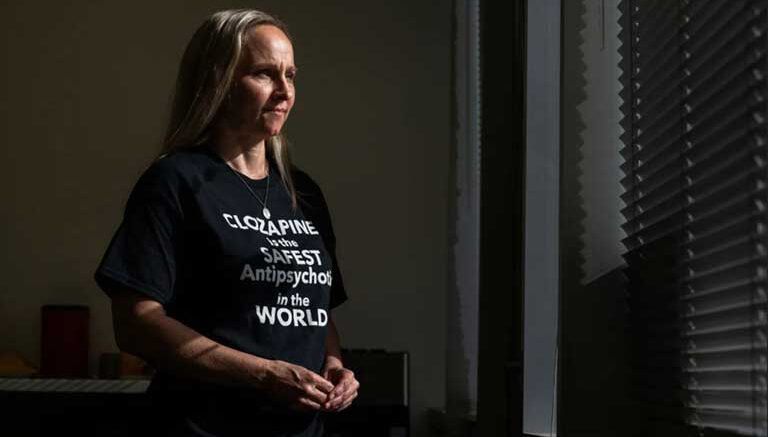
The following morning, the Angry Moms arrived at FDA headquarters in matching red manicures and black T-shirts that read: “Clozapine is the safest antipsychotic in the world.” Streiff found a seat in the third row of an oversized conference hall as other mothers filled the chairs behind her.
By day’s end, the advisory committee members taking their seats would vote on a central question: Were the FDA’s blood monitoring requirements necessary for the safe use of clozapine?
Dr. Tiffany Farchione, the FDA’s silver-haired psychiatry chief, opened the meeting with a startling admission: The agency was not sure whether its blood testing program was actually effective in detecting severe neutropenia, the disorder it was designed to catch.
“We don’t know whether the REMS program is meeting its goal,” Farchione said. “We are also aware that there are concerns about the burden the REMS may have on stakeholders and patient access.”
A 2021 overhaul of the system had inadvertently disrupted clozapine access nationwide, prompting complaints from caregivers, criticism from Congress, at least one lawsuit from a psychiatrist and repeated calls for reform. Yet the monitoring framework remained largely intact.
Next up were pharmaceutical leaders and medical experts, who agreed clozapine had unique benefits and was underused. They differed, though, on how much they thought the monitoring program was to blame.
The afternoon was devoted to public comment. Ten mothers, four people with schizophrenia, and more than a dozen doctors and psychiatrists testified to the consequences of losing access to clozapine—or not having it at all.
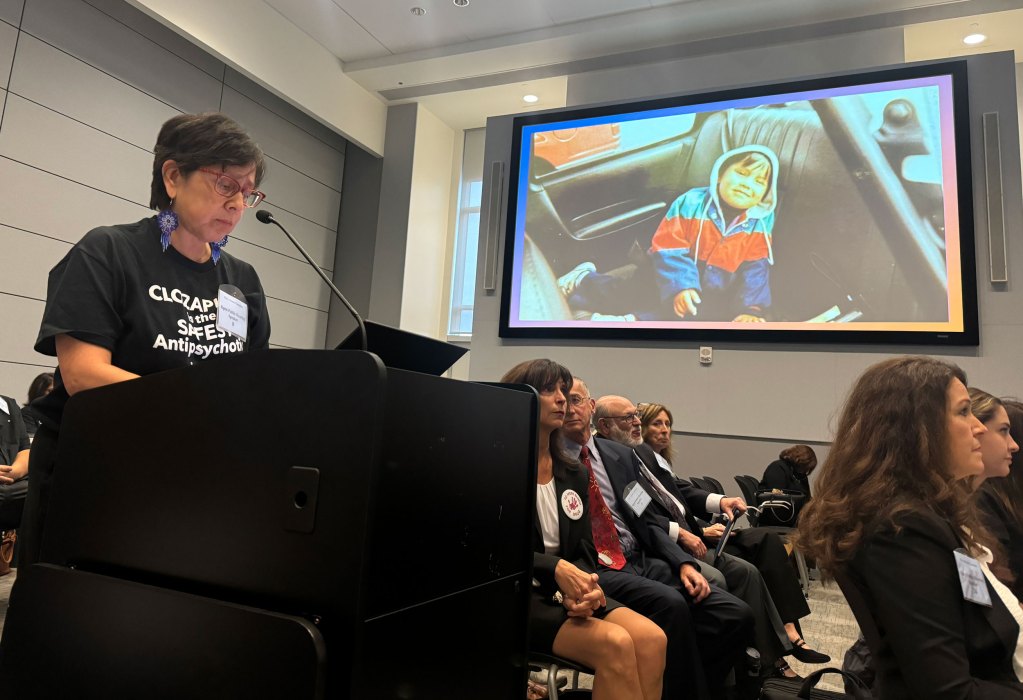
When it was Streiff’s turn, she spoke of the thousands of patients who’d had their refills blocked by mistake during the REMS overhaul.
“Did anyone investigate those outcomes?” she asked. “Are they dead, jailed, institutionalized? How many completed suicide?”
Analisa Chase, a 32-year-old behavioral interventionist from Washington state, explained how missing a single blood draw led to a five-week psychiatric hospitalization. “I now live in fear that a logistical problem or misinformed pharmacist will block my clozapine prescription,” she said.
Another woman read a statement from her daughter, Joni Martin, who could not attend because she was still recovering from a clozapine interruption nearly three years earlier.
“For two decades, I was well, and now I’ve lost all of that,” Martin wrote. “One five-day loss of clozapine has ruined my life.”
“For two decades, I was well, and now I’ve lost all of that. One five-day loss of clozapine has ruined my life.”
Joni martin, clozapine patient
Other speakers recounted repeated suicide attempts, years of homelessness and dozens of psychiatric hospitalizations. One woman said her son was stabilized on clozapine to stand trial, only to lose any chance of early release when the drug was discontinued in prison and his psychosis returned.
Many testimonies ended with the same refrain: “The greatest risk of clozapine is not getting clozapine.”
As committee members listened, several looked shaken, raising their eyebrows or wiping away tears.
One, a psychiatrist, said he had been persuaded to abolish the REMS program by the “intensity of suffering” described by patients and families. The meeting chairperson called the system “not tenable.”
Then came the vote.
Within seconds, the tally appeared on the screen: 14 of 15 members thought the clozapine REMS was unnecessary. The lone dissenter, a psychiatry professor from California, said he preferred a scaled-back version of the program.
In the halls of the FDA, the Angry Moms hugged and posed for a group picture before heading into downtown Silver Springs to celebrate.
The FDA would spend the next few months deliberating in private, deciding whether to keep the monitoring program, modify it or abolish it.
Long before mothers took on the FDA, schizophrenia was considered untreatable.
Early therapies offered little more than gruesome trial and error. Patients were subjected to extreme medical interventions ranging from castration to the removal of other organs. In the 1940s and ‘50s, doctors performed lobotomies that left tens of thousands with permanent brain damage. Admissions to psychiatric hospitals swelled, with little hope for recovery.
A breakthrough came in 1952 with chlorpromazine, commonly known by its brand name Thorazine, the first drug to quiet psychosis. Though the new medication wasn’t a cure, it softened the intensity of delusions. Still, many were left with little relief.
Clozapine, introduced in the 1970s, was the first drug to control psychosis without causing the repetitive movements that had become part of the illness’s public face. Its emergence challenged the prevailing understanding of schizophrenia and raised the possibility of recovery for more patients.
But its promise vanished almost as quickly as it appeared. In 1975, a cluster of clozapine patients in southern Finland developed a rare blood disorder, and eight died from infections. Clozapine trials were immediately halted, and the drug was pulled from the market.

In the United States, a researcher named Gil Honigfeld shut down his clinical trial but kept a small number of the sickest patients on clozapine through a compassionate-use program. Years later, Honigfeld returned to the half-completed trial and found that clozapine had outperformed Thorazine—the first sign that anything could.
A landmark double-blind study followed, and in 1989, the FDA approved clozapine.
Now 91, Honigfeld still gets emotional about his work. In a public library near his home in Princeton, the “Godfather of Clozapine” took off his glasses and wiped away tears as he reflected on that landmark study.
“That was the one where we were apparently dead in the water,” he said. “As it turned out, we ended up in the resurrection business.”
FDA approval came with stringent protocols. Fearing a repeat of the Finnish fatalities, regulators required weekly blood monitoring and mandated a black box warning, the FDA’s strictest labeling.
Still, clozapine patients did remarkably well. They were less likely to be hospitalized or attempt suicide. In a disease where half of people with schizophrenia will make such an attempt in their lifetime, only 7% of those on clozapine did over two years.
The risk of severe neutropenia also turned out to be relatively rare. Only 12 of 100,000 people taking the drug over five years died of the disorder.
Despite its success, clozapine was never widely adopted. Newer antipsychotics were easier to prescribe and heavily marketed, even if they didn’t work as well for the sickest patients. Without a champion, clozapine remained a drug of last resort.
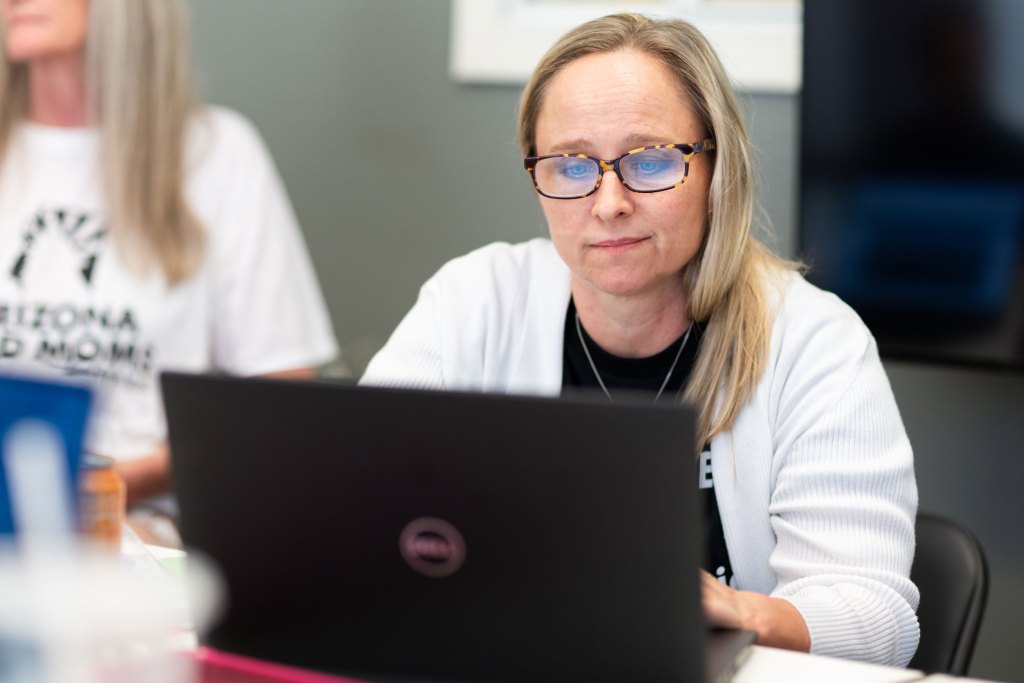
After the FDA hearing, Streiff returned to Psych ZenHealth, a small mental health clinic in midtown Phoenix where she helped clinicians a few hours a week to facilitate access to clozapine.
One afternoon in January 2025, in an office lit by fluorescent overhead lights, Streiff tightened a blood pressure cuff around the arm of a 14-year-old boy while his little sister, 9, swiveled in an office chair. Jimmy and Bella, a pair of adopted children, were the day’s first clozapine patients—and by far the youngest.
Jimmy was diagnosed with bipolar disorder with psychosis at age 5. He’d been talking to a “scary nurse,” then started begging his mother, Michelle Smet, for a gun and running into oncoming traffic. The family tried multiple medications over seven years that sedated him but failed to control his psychosis. A psychiatrist told Smet about clozapine—but refused to prescribe it.
When Smet contacted Psych ZenHealth, Streiff called back right away. Clozapine stopped Jimmy’s violent outbursts and broke his cycle of hospitalizations. He started playing with friends again and learned to read.
When Bella started having visual and auditory hallucinations at age 7, Smet “didn’t skip a beat.” She called Streiff and asked to put Bella on clozapine. “It’s the only thing that helped (Jimmy). I’m not having her lose her childhood over it.”
Streiff had built much of her work around cases like this, connecting desperate caregivers to treatment, fielding calls when prescriptions fell through and helping troubleshoot access. She quit her engineering job two years earlier to get finger-stick devices that test for the rare blood disorder into homes and clinics.
Soon, the next patient would arrive at the clinic. “I need more time. I need a clone,” Streiff said, before ushering Bella to her appointment. She has seen firsthand the burden placed on mothers when the mental health system fails.
“Mothers are the new asylums,” she often says.
Five weeks later, Streiff entered the PsychZen office and saw her phone light up with a message.
“Congrats,” the text read.
It was from Gordon Lavigne, the head of Schizophrenia & Psychosis Action Alliance, one of the nonprofits that helped lead the push to overhaul REMS alongside the National Alliance on Mental Illness.
Lavigne told her the FDA had made an announcement: The REMS program was eliminated. Streiff’s eyes welled with tears.
“It was kind of a speechless moment,” she recalled.
She opened the FDA website to see the announcement herself: “Although the risk of severe neutropenia with clozapine still exists, FDA has determined that the REMS program for clozapine is no longer necessary to ensure the benefits of the medicine outweigh that risk.” The change, the FDA said, aimed to increase access to the medication.
Streiff posted the announcement on the support Facebook page.
“Breaking,” she wrote. “FDA ends the Clozapine REMS.”
The page immediately lit up with celebration and thanks.
“Our voices are a powerful tool for change. This proves it,” one mother wrote.
“Goosebumps that won’t stop coming,” wrote another.
For a moment, they could dream about what else was possible: expanding clozapine access globally, developing a better schizophrenia drug without the side effects—maybe even finding a cure.
But right away, mothers began reporting that pharmacists didn’t understand the new rules, or weren’t complying.
“There’s been mass confusion at pharmacies,” Streiff said later. “It’s a typical, confusing FDA rollout.”
In April, Streiff got a call from a hospital whose pharmacy was refusing to dispense clozapine to a 32-year-old woman—Streiff’s legal ward—because they couldn’t find a blood test.
Exasperated, Streiff interrogated the pharmacist, explaining the FDA decision and threatening to file a grievance. She tracked down the missing blood test and complained to the Arizona Health Care Cost Containment System, the state’s Medicaid agency.
The woman missed just one dose.
“It’s still acceptable to torture a patient with schizophrenia by withholding their clozapine just for the sake of a routine blood test—still,” Streiff said.
By summer, reports of denials slowed. Pharmacies no longer had to register with the REMS, and more of them started stocking clozapine.
But with one barrier gone, another surfaced: Many doctors continued to mandate blood tests to get a prescription refill. The drug’s package insert still recommended the strict monitoring regimen REMS had required, leaving providers exposed to liability if they chose to deviate from it.
Others declined to prescribe the drug at all, deterred by complex dosing and side-effect management. No one had fixed the training gap that left as many as 40% of psychiatry residents uncomfortable with the drug in the first place.
“It’s not one thing,” said Deanna Kelly, a psychiatry professor specializing in clozapine research. “It’s lack of education. It’s lack of confidence in our patients getting their blood draws. It’s a system that’s broken. It’s reimbursement rates that don’t help people get paid for complex care.”
Clozapine utilization rates haven’t budged since the REMS program ended, according to experts.
Kelly said she would like to see the U.S. develop treatment guidelines for clozapine—similar to what was issued in Europe last year—and a national training program for clinicians to increase prescription rates.
In the meantime, Streiff went back to work advocating for the drug and coaching mothers to educate providers about the FDA’s updated guidance.
“No one understands the risk-benefit math,” Streiff said. “Failing to use clozapine is so much more deadly than the risks of the drug itself.”

On the morning of Dec. 22, 2025, 10 months after the FDA’s decision, a deputy was responding to a vehicle collision in Mesa when he heard a woman screaming.
He drove toward the sound and stopped just north of a budget motel, where he found Gina Huskey crouched at the edge of a 5-foot drop to an overgrown drainage canal.
“He’s dead,” she shouted. “He’s dead.”
At the bottom of the canal lay Huskey’s son, Richard Valenzuela. He had closely cropped hair, a mustache and goatee, and wore socks with no shoes. His body was bent into a fetal position with an Arizona Cardinals hoodie beside him.
The medical examiner determined that Valenzuela, 30, died from an overdose of meth and fentanyl. Valenzuela, who went by Richy, had schizophrenia, and had used drugs to cope.
Months earlier, Valenzuela had been prescribed clozapine in a residential treatment program. His condition improved. After he was discharged, his grandmother thought he finally seemed happier, able to relax on the couch with the family’s two chihuahuas.
But his outpatient clinic, Copa Health, made him visit twice a week to get the pills. The rides the clinic coordinated were unreliable, Huskey said, and Valenzuela found it all too much to manage. He asked to be switched to a less burdensome medication. The provider agreed, and he deteriorated again.
Darwyn Chern, Copa Health’s chief medical officer, said he understood the frustration of families like Huskey’s.
He believes providers have a moral imperative to consider clozapine for treatment-resistant patients and supported ending the federal monitoring program to give the clinic more flexibility to skip blood draws. But he defended some level of monitoring as medically necessary.
“There’s risk in everything we do,” Chern said. “We have to somehow still learn how to negotiate and make acceptable compromises without endangering the patients’ lives. And listening to patients is also important.”
On the day her son went missing, Huskey texted Streiff for help.
“Hi my name is Gina—sorry it’s late,” she wrote. “Is there a special protocol to get the police to find my son?”
Streiff helped Huskey make a plan to call a crisis hotline and contact the clinic. Streiff would make a missing person poster.
The next morning, Huskey and her mother drove around the neighborhood looking for Valenzuela. Her mother spotted one of his sandals near the edge of the canal. By the time Streiff called Huskey that morning to check in, she had already found her son’s body.
“Anger is not even the right word,” Streiff said. “Rage. Outrage.”


In the days after Valenzuela’s death, Streiff helped draft Arizona Senate Bill 1716, also known as Richard’s Law, named after Valenzuela. The law would give patients the right to waive clozapine’s blood monitoring requirements and prohibit withholding the medication over a missing blood test.
Streiff hoped the bill would improve access for people in Arizona, where more than 21,000 of those insured by the state’s Medicaid agency had a schizophrenia diagnosis as of summer 2025. Among them, just 1,180 were prescribed clozapine.
She found a willing lawmaker in Sen. Lauren Kuby, a Democrat representing parts of Maricopa County. But Kuby’s bill failed to get a hearing, despite being assigned to multiple committees. Kuby said she intends to try again next session.
The clozapine revival Streiff had hoped for hardly felt any closer. On the Facebook page, mothers continued posting when doctors required a blood test or said they wouldn’t prescribe the medication.
“I keep going in between hope for the future and despair,” Streiff said. “Today, it’s despair.”
In Crisis?
National suicide prevention: call or text 988
National substance use and treatment hotline: 1-800-662-HELP (4357)
Arizona statewide crisis line: call 1-844-534-HOPE (4673) or text 4HOPE (44673)
Services available by county and tribal community
Support groups and advocacy organizations:
- Team Daniel on Facebook: advice and mutual aid about clozapine
- Arizona Mad Moms
- Angry Moms
- Schizophrenia & Psychosis Action Alliance: resources and peer support
- National Alliance for Mental Illness in Arizona
This article first appeared on Arizona Center for Investigative Reporting and is republished here under a Creative Commons Attribution-NoDerivatives 4.0 International License.