

Contributed article by Diane Drobka
SAFFORD — The New Year brought a special surprise to the Gila Watershed Partnership’s Native Plant Nursery.
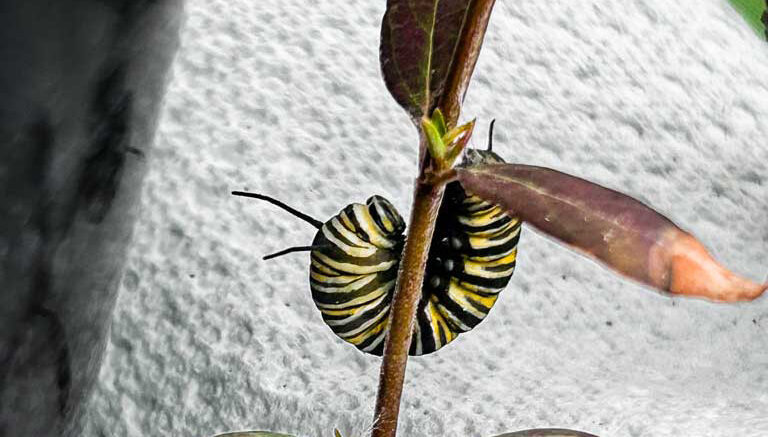
While working under shade structuresnear the greenhouse on Jan. 5, nursery manager Jennifer Farris discovered several monarch butterfly caterpillars, a very exciting and unexpected find. Apparently, as the iconic Times Square Ball in New York City and the giant pine cone in Flagstaff were dropping, female monarch butterflies were ready to drop their little eggs at Discovery Park the next morning.
Over the following days, further inspection yielded many more caterpillars in Arizona milkweed plants within the shade ramada and the seed orchard belonging to the Desert Seed Resource Center. In various stages of growth, some were so tiny that they had obviously just hatched and others were getting close to pupation.
Finding active caterpillars was totally unanticipated at this time of year.
“I suspect that our unseasonably warm weather throughout December likely attracted female monarchs to our butterfly way station,” Farris said.
Greenhouse plants and surrounding native landscaping provide food for a variety of butterflies.
The resulting hatchlings were at risk due to the abrupt change in weather, making immediate action necessary to help this imperiled species. GWP staff and volunteers knew how important it was to save as many caterpillars as possible. Farris, with help from Steve and Julie Plath, collected 42 caterpillars, knowing that they were likely doomed if they remained in the chilly weather.
Farris contacted Butterfly Wonderland in Scottsdale and they provided information on how to help the caterpillars. To protect them from the cold temperatures, they were placed in a mesh butterfly enclosure inside the greenhouse where they are provided with milkweed to munch and are monitored daily.
Feeding their tiny yet voracious appetites is somewhat of a challenge, going beyond Arizona milkweed being grown at the nursery. The Plaths even drove to Pima to borrow a potted milkweed to share clippings with the critters.
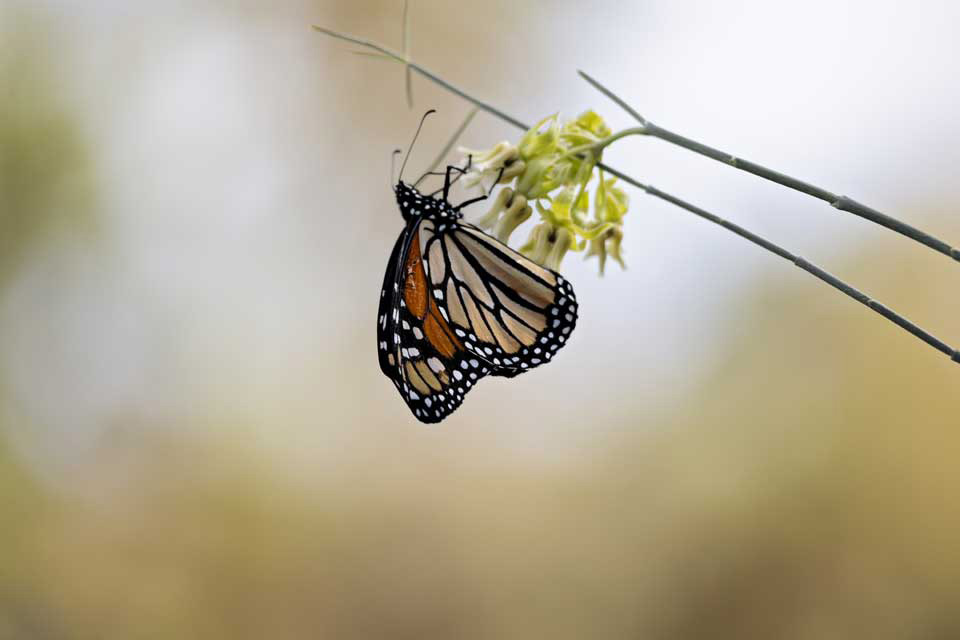
– Contributed Photo/Jennifer Farris
As each monarch emerges from its chrysalis, it can be released outdoors as long as the temperature is above 55 degrees. Most days in southeastern Arizona are suitable for releasing butterflies, even throughout the winter.
Once abundant, monarch populations have been steadily declining since the mid-1990s. Over the past two decades, their numbers in North America have declined, prompting the U.S. Fish and Wildlife Service to join tribes, state agencies, other federal agencies, and concerned groups to identify threats to monarchs and take steps to conserve them throughout their range.
Monarch butterflies are considered vulnerable throughout their distribution worldwide.While native here, they have been introduced and established populations in Australia, New Zealand, and parts of Europe.With its vivid orange and black pattern, the monarch butterfly is one of the most recognizable species in North America.
They are particularly remarkable for their long-distance migration, flying from as far as Canada and across the United States to congregate at a few forested overwintering sites in the mountains of central Mexico and coastal California. The complexity of their migration is especially intriguing. The butterflies that fly south for winter don’t make the full round trip; it’s their offspring (and their offspring’s offspring) that continue the journey north in the spring.
“The conservation and restoration of our beautiful natural world can take many forms,” said GWP executive director Sarah Sayles. “Sometimes, opportunities to help nature present themselves in unexpected ways, and this is one of them. You can even help increase the monarch population by planting milkweed and other native flowering plants in your own yard this spring or fall.”
GWP is long-time conservation nonprofit in the Gila Valley providing expertise and skillful labor on many projects related to restoring and conserving the Upper Gila watershed. To find out more, visit gwpaz.org.