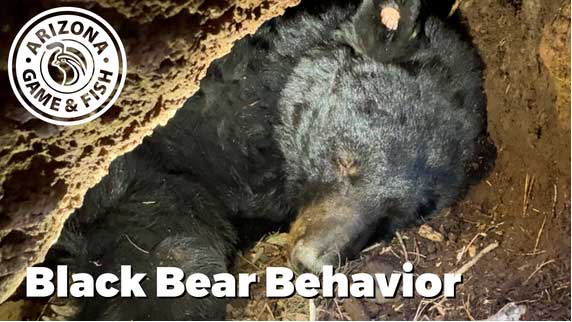

Watch AZGFD researchers go inside a black bear den near Flagstaff
New video gives inside look at a landmark bear study

A new video by the Arizona Game and Fish Department (AZGFD) is giving viewers a behind-the-scenes look at how researchers are gathering data about Arizona’s black bear population. The research is a part of a statewide study that will help the department make appropriate management decisions using the best available science.
The video follows a team of AZGFD biologists conducting one of dozens of den checks for the study– a carefully choreographed process of sedating and temporarily removing a black bear from its den to gather biological samples and check the fit of its radio tracking collar.
For the past year, AZGFD biologists have trapped over two dozen black bears across Arizona’s various landscapes and outfitted them with radio-tracking collars to simultaneously monitor their movements– from the alpine forests in the north to the sky island mountain ranges in the south.
The primary goal of the research is to collect data for estimating bear survival and causes of deaths. By incorporating this information with existing data on the number and ages of bears that are harvested each year, the department can create better estimates for Arizona’s black bear population size.
These population models will inform the successful management of the species.
American black bears are currently the only bear species in Arizona, living in a variety of habitats across northern, eastern, southeastern and central parts of the state. Despite their name, black bears can have several colors of fur other than black, including brown, blond and cinnamon.
“Arizona is really unique in that we have such a variety of habitat types. A big part of this is seeing if the bears in the White Mountains are doing things differently from the Sky Island bears,” said Samuel Lisak, the AZGFD wildlife specialist leading the project.
The field activities for the research will continue through 2030, quickly followed by a final data analysis.
“It’s really important for the department to know this information, because we are the stewards of Arizona’s bears, and the data informs hunt recommendations for Commission Orders, which are then published in hunt regulations,” said Reilly Jackson, AZGFD terrestrial research program manager.
“The department also responds to bear calls from the public,” said Jackson, “This information is necessary to look at the population holistically and set science-based recommendations.”